Gambling in Las Vegas: A Beginner's Guide
The flashing lights, the chips, the felt tables, the wall of slot machines that never sleeps. If you've never set foot in a casino, here's how it all works, how to play, and how to walk out with your evening intact.
Updated June 2026
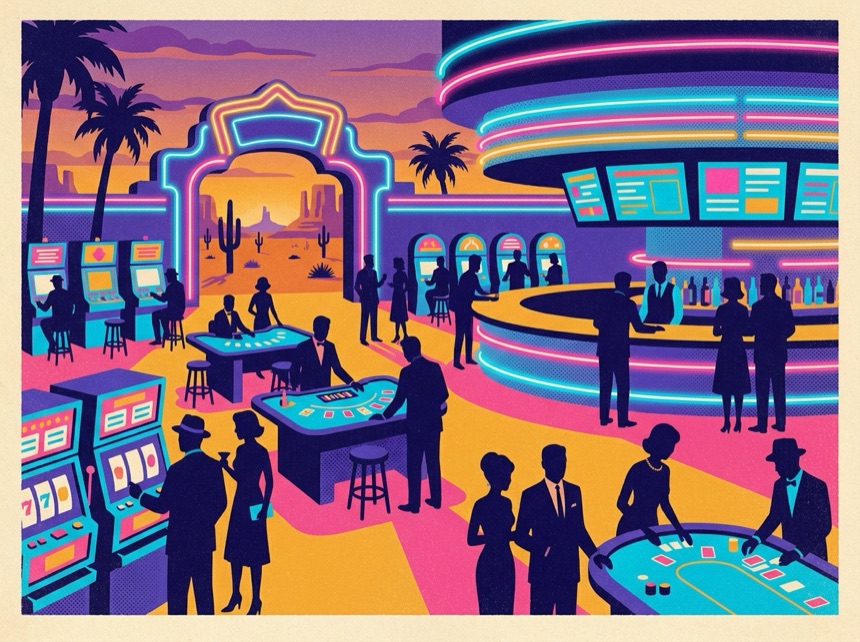
A casino floor can look like organized chaos on your first visit, but it follows a pretty simple logic. The slot machines line the walls and aisles in glowing rows; the table games cluster in a central pit watched over by dealers and a pit boss; and somewhere off to the side you'll find a cashier's cage, a players-club desk, and a sportsbook full of screens. The trick is knowing you don't have to play anything you don't understand, and that the house always has an edge. Treat it as paid entertainment and you'll have a far better night than the person chasing a jackpot.
This guide is for the curious first-timer who wants to sit down at a table without feeling out of their depth. We'll cover how the floor works, the difference between slots and table games, the basics of blackjack, roulette and craps, what those table minimums mean, how to tip, why you should grab a players card, and the single most important habit of all: setting a budget before you ever touch a chip. If you're still mapping out your trip, our Things to Do guide and our walk through the Strip will help you fit a casino night into the bigger picture.
Know the house rules
Three things to understand before you play a single hand, and one that's the law.
Slots vs. table games
Slots are the easy on-ramp; the tables give you better odds and a livelier room.


Etiquette & tipping
A few unwritten rules that mark you as a guest who knows the ropes.
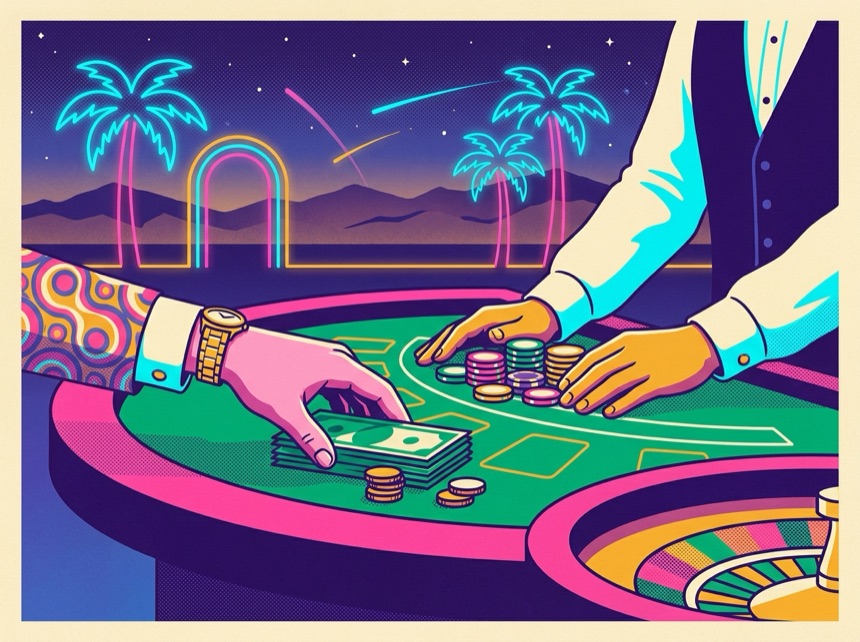
- Set your cash on the felt rather than handing it to the dealer, and wait for a break between hands to buy in.
- Once the cards are out, keep your hands off your bet; touching chips mid-hand looks like cheating. Use hand signals, not just words, for hit and stand.
- If you don't know a rule, just ask the dealer. They'd far rather explain than watch you struggle, and a friendly table is the whole point.
- Tip the dealer now and then, especially after a good run; a common move is to place a small bet for them alongside yours. Tip cocktail servers a dollar or two per drink (the drinks are free while you play, the service isn't).
- No photos or phones at the table, and don't lean on the felt or block the chip rack. Color up your chips into larger denominations before you head to the cage.
Cards, comps & a budget
How to get a little back, and how to make sure the casino doesn't get more than you meant to give.
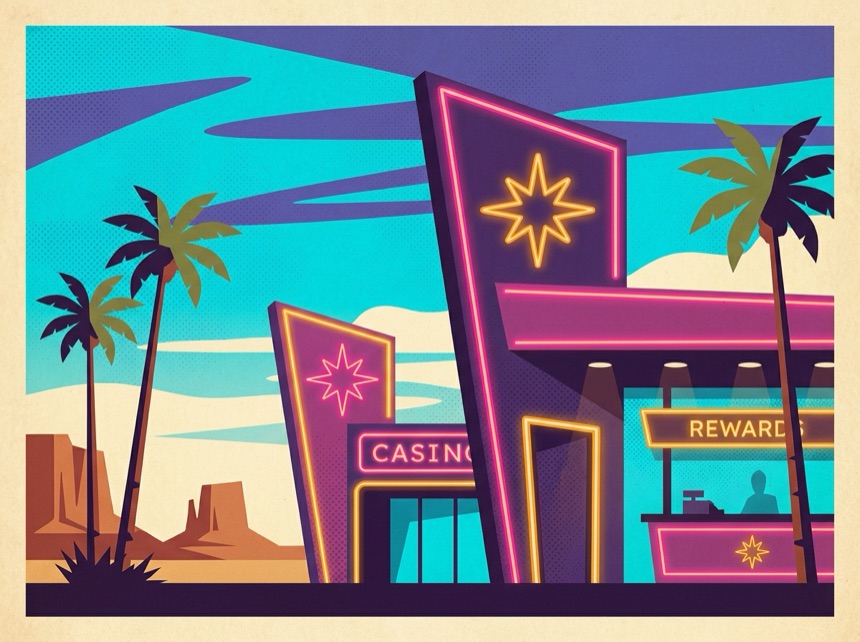
- Sign up for a players club card before you play anything. It's free, takes two minutes at the rewards desk, and your tracked play earns points toward free play, meals and room discounts. New-member sign-up bonuses are common too.
- Always use the card, even on small bets. Comps like a free buffet, a show ticket or a room rate are based on how much the casino sees you play, so a card that's never inserted earns nothing.
- Decide your budget before you arrive and treat it as the price of a night out, like a concert ticket. Bring that amount in cash, leave the cards in the room, and when it's gone, you're done.
- Set a walk-away number for winning too. If you double up, pocket your original stake and play with the house's money, or simply cash out and go enjoy the rest of the city.
- Many casinos run free lessons for blackjack, craps and roulette in the mornings; ask at the desk. It's the lowest-pressure way to learn, and you'll sit down later knowing exactly what you're doing.
Where to go next
A casino night is just one chapter; here's how to build the rest of the trip around it.

The Strip
Where most of the big-name casino floors live, end to end along Las Vegas Boulevard.

Things to Do
Shows, dining, pools and attractions for when you've stepped away from the floor.
Where to Stay
From Strip megaresorts to downtown classics, find the casino-hotel that fits your trip.

Itineraries
Ready-made day-by-day plans that work a casino night in around shows, food and day trips.
Common questions
How old do you have to be to gamble in Las Vegas?
You must be 21 or older to gamble anywhere in Nevada, including slots, table games and the sportsbook, and to even loiter on the gaming floor. Bring a valid photo ID, because dealers and security check regularly. The same minimum age applies to drinking and to most nightclubs.
What is the easiest casino game for beginners?
Slots are the simplest because there's no strategy at all: insert money, set your bet and press a button. Among the tables, roulette is the easiest to understand and blackjack offers the best odds with a little basic strategy. Craps looks intimidating but a simple pass-line bet is easy to learn and has a low house edge.
What is a table minimum and how much is it?
The table minimum is the smallest bet allowed at that table, posted on a sign at the corner. On the Strip it commonly starts around $15 to $25 and goes up from there, with noticeably lower minimums downtown, off-Strip and during quiet morning hours. Minimums climb in the evenings and on weekends, so check the posted sign and shop around for a table in your budget before you sit down.
Should I get a players club card, and do they cost anything?
Yes, and they're free. Sign up at any rewards desk with a photo ID, then use the card every time you play so your action earns points toward free play, meals, shows and room discounts. Major programs include MGM Rewards, Caesars Rewards and Wynn Rewards, and many offer a sign-up bonus.
How much should I budget for gambling in Las Vegas?
Decide on an amount you're comfortable losing before you arrive and treat it like the cost of a night out. Bring that as cash, set a walk-away number for both losses and wins, and never chase losses or bet money you need for anything else. When the budget is gone, step away and enjoy the rest of the city.
Do I have to tip the dealer?
Tipping isn't required but it's customary, especially after a good run or a friendly session. A common way to do it is placing a small bet for the dealer alongside your own. Also tip the cocktail servers a dollar or two per drink; the drinks are complimentary while you play, but the service is not.